


Hair Removal Cream in Pregnancy: Is It Safe?

Chose Your Topic
Can Hair Removal Cream Be Used During Pregnancy?
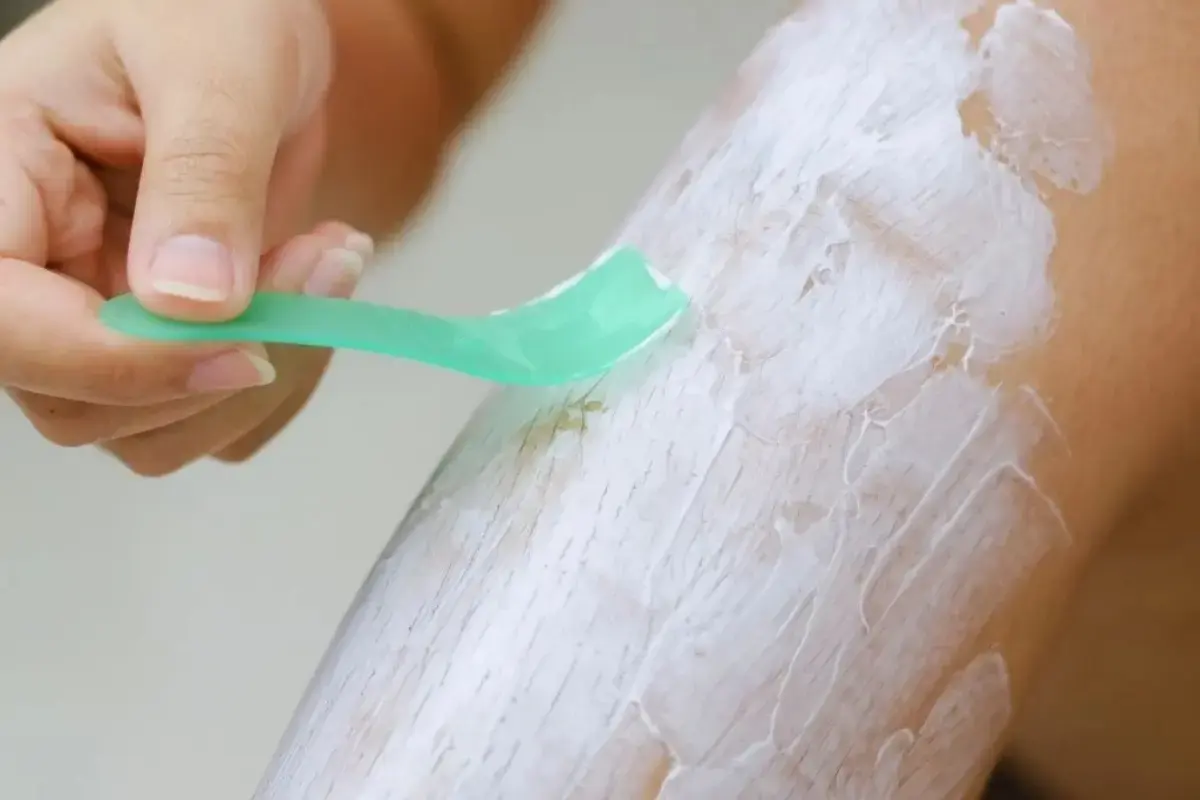
Hair removal (depilatory) creams are generally considered low risk in pregnancy when used exactly as directed, because they act on the hair at the skin’s surface. Still, many clinicians advise caution since pregnancy can make skin more reactive, and these creams can cause irritation or chemical burns. If you’re unsure, ask your OB-GYN or midwife first.
Is Hair Removal Cream Safe During Pregnancy?
Most depilatory creams work by breaking down the protein structure of hair so it wipes away at or just below the skin line. Because they’re applied topically and used for a short time, systemic exposure is expected to be limited.
That said, “safe” in pregnancy often comes down to real-life tolerance. Hormonal changes can make your skin more sensitive, and depilatories can be irritating even when you’ve used them before. The American College of Obstetricians and Gynecologists (ACOG) notes depilatory creams can be very irritating and doesn’t recommend them for pubic hair care for that reason.
So the practical takeaway is this: many people use depilatory creams during pregnancy without a problem, but irritation risk is real—especially in delicate areas.
What’s in Hair Removal Creams That Can Cause Problems?
Thioglycolates (the active “hair-dissolving” ingredient)
Many depilatories use thioglycolic acid or salts like calcium thioglycolate to break down keratin in hair. They’re effective, but they can also sting or burn sensitive skin.
Alkaline agents and high pH
Depilatories often include alkaline ingredients that help the product work (and that “strong smell” is part of the chemistry). Higher pH can increase irritation, particularly if your skin barrier is already dry or reactive.
Fragrance and preservatives
Fragrance is a common trigger for itching, redness, and rash—problems that can feel amplified during pregnancy. If you’re trying a cream while pregnant, fragrance-free/sensitive-skin formulas are usually a smarter starting point.
When It’s Better to Avoid Depilatory Creams
Consider skipping hair removal cream (or getting medical advice first) if any of these apply:
- You have eczema, psoriasis, rosacea, or a history of contact dermatitis.
- Your skin is broken, sunburned, freshly exfoliated, or recently shaved.
- You’re prone to ingrown hairs or folliculitis and the area gets inflamed easily.
- You have asthma or strong pregnancy-related nausea and the odor is likely to trigger symptoms.
- You have a high-risk pregnancy or medical complications and want the most conservative approach. (Your clinician can guide you based on your situation.)
Also, be extra careful with bikini/genital areas. The skin is thinner and more reactive, and irritation there can be miserable.
If You Choose to Use Hair Removal Cream, Do It as Safely as Possible
1) Patch test every time (even if you used it before)
Pregnancy can change your skin. Apply a small amount to an easy-to-watch area (like the outer arm), follow timing instructions, and wait 24 hours to see if redness or itching develops.
2) Follow the timing exactly—don’t “push it”
Leaving depilatory cream on longer than directed is the fastest path to a chemical burn. If it starts to sting or burn, remove it immediately.
3) Use it in a well-ventilated room
Odor can be intense and may worsen nausea. Open a window or use a fan, and avoid using it in a steamy bathroom.
4) Rinse thoroughly and moisturize gently
Use lukewarm water and avoid scrubbing. Afterward, apply a simple, fragrance-free moisturizer to support the skin barrier.
5) Don’t combine with other irritants
Avoid retinoids, acids, harsh body scrubs, or strong fragranced products on the area for at least 24–48 hours.
Safer Hair Removal Options During Pregnancy
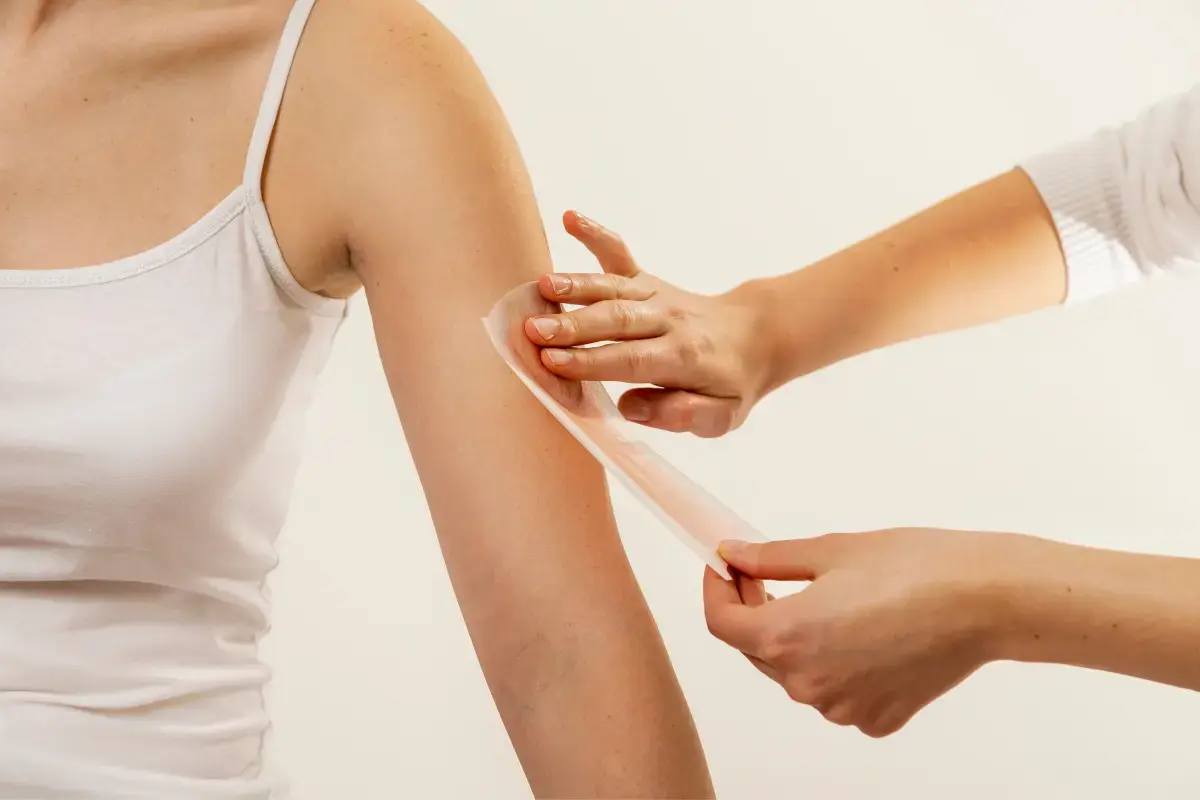
If depilatory creams feel like a gamble, these options are commonly used during pregnancy:
- Shaving or trimming: Simple and controlled, but use a gentle shave gel and go slow to reduce nicks.
- Tweezing/threading: Helpful for small areas like the face.
- Waxing/sugaring: Often fine, but pregnancy can increase pain and sensitivity.
For laser hair removal and other permanent methods, many experts recommend waiting until after pregnancy because safety data is limited and skin can be more reactive.
When to Contact Your Clinician
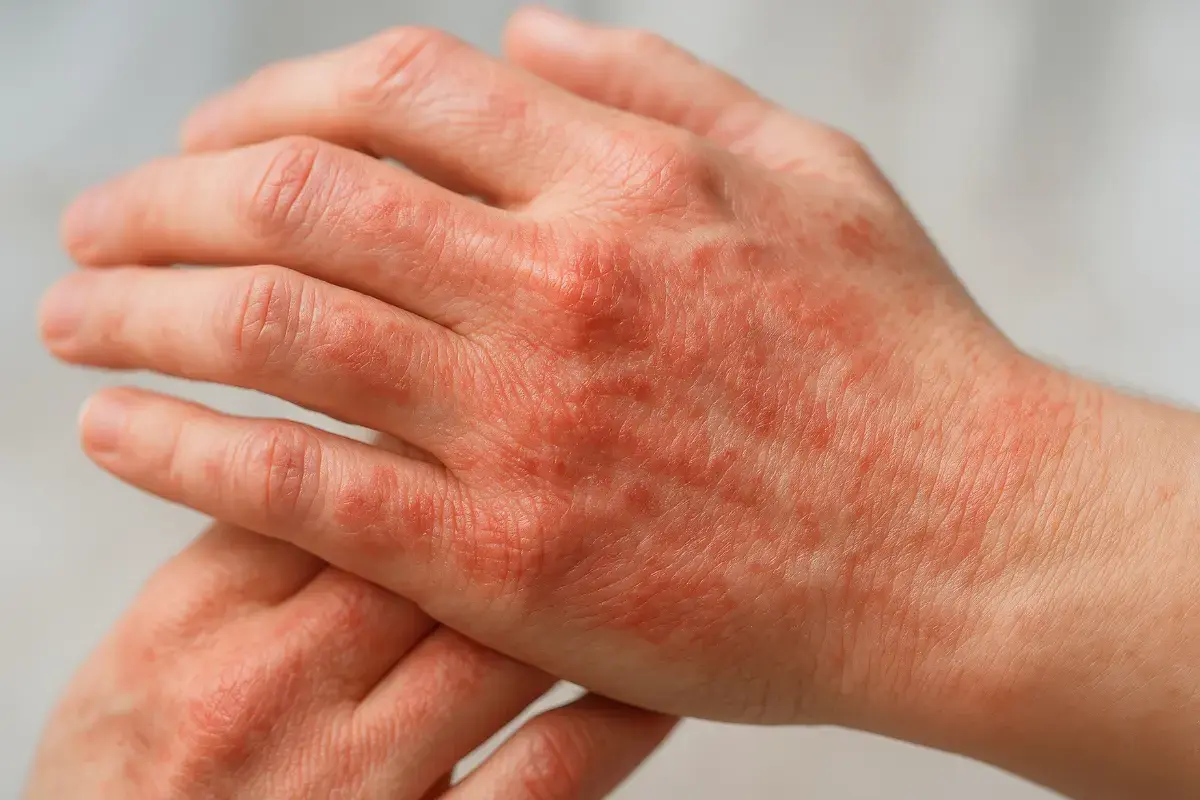
Stop using the product and seek medical advice if you notice:
- Blistering, swelling, or severe burning
- Spreading rash or hives
- Signs of infection (increasing redness, warmth, pus)
- Breathing symptoms triggered by fumes
If you’re ever unsure, your OB-GYN/midwife or a dermatologist can help you choose the most pregnancy-friendly approach for your skin.
Frequently Asked Questions (FAQ)
There isn’t strong evidence that trimester changes the “safety” of topical depilatories. What often changes is skin sensitivity and nausea both can make depilatories harder to tolerate later in pregnancy.
Generally, topical products used briefly on intact skin are considered low risk, but avoid applying near the nipple/areola and wash hands thoroughly. If your skin is irritated or cracked, choose a different method and ask your clinician.
If you want, I can also tailor this into a service-page style version (shorter, more conversion-focused) or adapt it for a specific target country (UK/US/EU search intent and wording).

